Wednesday, 24 April 2024

Assignment on 209


Assignment on Forms of Plagiarism

Name: Nirali Dabhi

Roll number: 13

Enrollment Number: 4069206420220006

Sem: 4

Paper number: 209

Paper Code: 22416

Paper Name: Research Methodology

Topic: Forms of Plagiarism

Submitted to: Smt S.B. Gardi, Department of English, M.K.B.U

Email: niralidabhi95@gmail.com

Introduction

Plagiarism is a serious ethical and academic offense that involves presenting someone else's work, ideas, or words as one's own without proper attribution. It undermines the integrity of academic and professional endeavors and can have severe consequences, including reputational damage, legal action, and academic penalties. There are various forms of plagiarism, including verbatim or direct plagiarism, mosaic plagiarism, self-plagiarism, source-based plagiarism, ghostwriting, accidental plagiarism, and global or complete plagiarism. Each form poses unique challenges and risks, highlighting the importance of understanding and avoiding plagiarism in all its manifestations.

Origin of the word Plagiarism

The term "plagiarism" originates from the Latin word "plagiarius," which initially referred to a kidnapper. This Latin term evolved from "plaga," meaning a net used by hunters, to capture people rather than prey. Over time, "plagiarius" extended to describe individuals who stole literary works or ideas from others. As it transitioned into English, the term appeared as "plagiary," indicating literary theft.

In contemporary usage, "plagiarism" denotes the act of presenting someone else's work, ideas, or words as one's own without proper attribution. It has serious implications in academic and professional settings, including reputational damage and legal consequences. 

What is Plagiarism?

Plagiarism (“plagiary”) derives from the Latin word ‘‘Plagiarius’’which means a kidnapper and it was fi rst described in literature by the dramatist Ben Jonson in 1601 to describe someone guilty of literary theft.
According to the Merriam-Webster online dictionary, to "plagiarize" means:

  • to steal and pass off (the ideas or words of another) as one's own

  • to use (another's production) without crediting the source

  • to commit literary theft

  • to present as new and original an idea or product derived from an existing source

In other words, plagiarism is an act of fraud. It involves both stealing someone else's work and lying about it afterward.

In the 17th century, the term "plagiarism" began to be used in the context of literature and art, to refer to the act of copying or imitating someone else's work without permission or attribution. This usage of the term became more widespread in the 18th and 19th centuries, as literary and artistic works became more valued and copyright laws were established to protect intellectual property.

According to Scribbr,  Plagiarism means using someone else’s work without giving them proper credit. In academic writing, plagiarizing involves using words, ideas, or information from a source without citing it correctly.

According to Oxford Dictionary plagiarism is the practice of taking someone else's work or ideas and passing them off as one's own.

MLA Handbook for writers of Research Papers noted that, Plagiarism involves two kinds of wrongs, using another person's ideas, information, or expressions without acknowledging that person's work constitutes intellectual theft. Passing off another person’s ideas, information, or expression as your own to get a better grade or gain some other advantage constitutes fraud.

Plagiarism is sometimes a moral and ethical offence rather than a legal one since some instances of plagiarism fall outside the scope of copyright infringement, a legal offense.

Forms of Plagiarism

Here are some forms of plagiarism given in MLA Handbook for Writers of Research Papers (Seventh Edition).

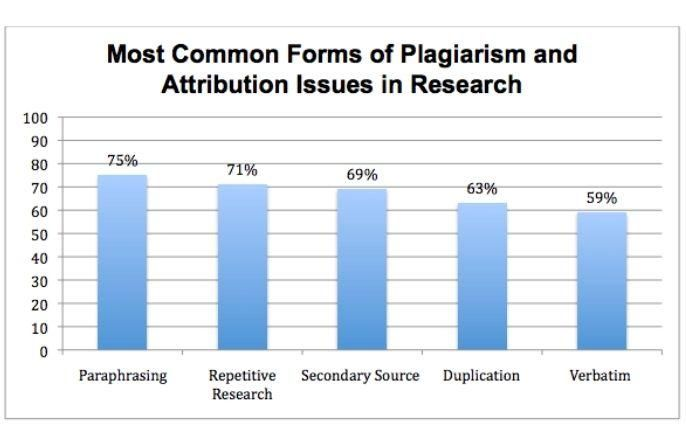
1) Repeating or Paraphrasing Wording: Repeating or paraphrasing wording involves using someone else's words or ideas without proper citation. This form of plagiarism can occur when a writer copies text verbatim, rephrases sentences or ideas without giving credit, or substitutes synonyms to mask the original source. For instance, if a student reproduces a passage from a book without quotation marks or citation, or if they reword the passage but retain the original meaning without acknowledging the source, it constitutes plagiarism.

Original Source: Someone is using information about Dickinson’s poems that appears on page 625 of an essay by Wendy Martin in the book Columbia Literary History of the United States.

Plagiarism: Emily Dickinson Firmly Believe that….

Without Plagiarism: As Wendy Martin has suggested, Emily Dickinson firmly believed that….

The example provided illustrates a form of plagiarism known as "repeating or paraphrasing wording." In this case, the writer has failed to properly cite Wendy Martin's essay as the source of information about Emily Dickinson's beliefs, presenting it instead as their own idea. 

To avoid this type of plagiarism, it is crucial to cite all sources accurately and use one's own words to express ideas. Acknowledging the original source, as in "As Wendy Martin has suggested," demonstrates academic integrity and ensures that credit is given where it is due. When conducting research, it is essential to record the sources of all information and paraphrase it in one's own words while still providing proper attribution. In academic writing, using direct quotes or paraphrasing requires both quotation marks and a citation to the original source to avoid plagiarism.

2) Taking a particularly Apt Phrase: Taking a particularly apt phrase without proper attribution constitutes a form of plagiarism wherein a writer incorporates a phrase or concept coined or made famous by another individual without giving credit. This form of plagiarism can be insidious, as the writer may unwittingly utilize a well-known expression without acknowledging its origin. For instance,

Original Source: Everyone uses the word language and everybody these days talks about culture… “Languaculture” is a reminder….(Michael Agar, Language Shock: Understanding the Culture of Conversation[New York: Morrow, 1994;60])

Plagiarism: At the intersection of language and culture lies a concept that we might call “Languaculture”.

Without Plagiarism: At the intersection of language and culture lies a concept that Michael Agar has called “Languaculture”.
The writer has committed plagiarism by using the term "Languaculture" without acknowledging Michael Agar as its originator. Agar coined this term in his book "Language Shock: Understanding the Culture of Conversation," yet the writer fails to provide proper credit, presenting the term as their own creation. This misrepresentation of intellectual property undermines Agar's contribution to the field of language and culture studies.

To prevent plagiarism, it is crucial to cite all sources accurately and acknowledge the original creators of ideas or phrases. In this case, the writer could have avoided plagiarism by explicitly attributing the concept to Michael Agar and referencing his work.  

3) Global or Complete Plagiarism: Global or complete plagiarism is a severe form of intellectual theft where an individual copies an entire work without acknowledging the original author. This unethical practice extends to various mediums such as books, articles, research papers, or websites. Essentially, it involves presenting someone else's intellectual property as one's own, devoid of any attribution or consent.

This type of plagiarism not only violates copyright laws but also undermines the integrity of academic and creative endeavors. Legal repercussions for engaging in global plagiarism can include fines, legal action, or even imprisonment, depending on the jurisdiction and severity of the offense. To prevent global plagiarism, it is imperative to give credit to the original authors by citing all sources accurately. This involves acknowledging their contributions to the field and providing proper attribution. 

4) Accidental Plagiarism: Accidental plagiarism occurs when individuals inadvertently present someone else's work or ideas as their own due to oversight or carelessness in citation practices. This can happen when individuals fail to properly attribute sources through unintentional paraphrasing, omitting citations, or neglecting to use quotation marks for direct quotations.

While accidental plagiarism is typically viewed as less severe than intentional plagiarism, it can still have serious consequences, including damage to one's academic or professional reputation, loss of credibility, and potential legal repercussions. To avoid accidental plagiarism, individuals should prioritize thorough proofreading and review of their work to ensure that all borrowed material is appropriately cited and attributed. This includes double-checking for missing in-text citations, ensuring proper formatting of direct quotations with quotation marks, and verifying the accuracy of reference lists or bibliographies.

5) Ghostwriting: While ghostwriting involves hiring someone else to write, edit, or proofread work without receiving credit or acknowledgment, it's not necessarily a form of plagiarism. Plagiarism typically involves presenting someone else's work as your own without proper attribution. In ghostwriting, there's an understanding between the writer (the ghostwriter) and the client that the client will take authorship of the work, often for reasons like time constraints or lack of writing skill.

Ghostwriting becomes problematic when the client fails to acknowledge the ghostwriter's contribution, passing off the work entirely as their own. In such cases, it can indeed raise questions about the client's academic integrity or professional credibility.

There are instances where ghostwriting is ethically and professionally acceptable. For example, public figures or professionals may collaborate with ghostwriters to bring their ideas or expertise to a broader audience. In these cases, it's common practice for the ghostwriter's role to remain undisclosed, and the authorship is attributed solely to the client. Ghostwriting itself isn't plagiarism, failing to properly credit the ghostwriter can lead to ethical concerns and potential consequences. 

6) Self-plagiarism: Self-plagiarism occurs when an author reuses their own previously published or submitted work without proper citation or attribution. While authors own the copyright to their work, they cannot simply republish it verbatim or reuse significant portions of it without acknowledging its prior publication.

This type of plagiarism can take various forms, such as submitting a previously published paper as new work, recycling sections of a previous manuscript without citation, or using the same data to support multiple publications without acknowledging the earlier work. The concern with self-plagiarism lies in its potential to misrepresent the author's original contribution to the field. To avoid self-plagiarism, authors should be vigilant in properly citing and attributing their own previous work. If they wish to reuse content from earlier publications, they should seek permission from the original publisher and clearly indicate the source of the material in the new work. By adhering to ethical standards and transparency, authors can maintain integrity in their scholarly endeavors.

7) Source-based Plagiarism: Source-based plagiarism occurs when an individual attempts to deceive or obscure the true origin of their work by directly copying or closely mimicking content from a source without appropriate acknowledgment.

This form of plagiarism encompasses various behaviors, including verbatim copying, paraphrasing without proper attribution, and incorrect citation practices. Improper citation involves citing a source but not following the correct citation format or omitting essential details, such as page numbers or publication dates, which hinders readers from verifying the information. Source-based plagiarism is a serious violation of academic integrity and ethics, leading to potential consequences such as academic penalties, reputational harm, and legal repercussions. 

8) Verbatim or Direct Plagiarism: Verbatim or direct plagiarism is the act of copying a portion of someone else's work word-for-word without providing adequate credit or attribution. In essence, it involves reproducing an exact sentence or passage from an original source without acknowledging the original author or putting the content in quotation marks.

This type of plagiarism can occur intentionally or unintentionally but is nonetheless a serious offense with potential legal and reputational repercussions. In academic and research writing, where authenticity and honesty are paramount, verbatim plagiarism is particularly concerning.

To avoid committing verbatim plagiarism, it is crucial to use proper citation and attribution practices. Whenever incorporating someone else's words or ideas into your own work, it is essential to enclose the copied text in quotation marks and provide a clear citation indicating the author's name, the title of the source work, and the page number. 

Conclusion

Plagiarism is a serious offense in academic and professional settings. It can take various forms, such as verbatim plagiarism, mosaic plagiarism, self-plagiarism, source-based plagiarism, ghostwriting, and accidental plagiarism. Each form of plagiarism poses a threat to the originality and integrity of one's work and can result in severe consequences, including loss of credibility, legal action, and academic or professional penalties. Therefore, it is essential to understand and avoid all forms of plagiarism by properly citing and acknowledging sources, utilizing effective research and writing strategies, and utilizing plagiarism detection tools when necessary.

Work Cited

Deeptanshu D, and Dogra Shubham. “What Is Plagiarism? - The Complete Guide [Ebook]” SciSpace, SciSpace Resources, 18 Oct. 2022,https://typeset.io/resources/the-only-plagiarism-guide-you-will-need/.

Gibaldi, Joseph. MLA Handbook for Writers of Research Papers. Seventh ed., Modern Language Association of America, 2015. 

Hornby, Albert Sydney. Oxford Advanced Learner's Dictionary of Current English / [by] A.S. Hornby; Editor Jonathan Crowther. Oxford, England: Oxford University Press, 1995.

“Plagiarism Definition & Meaning.” Merriam-Webster, 17 February 2023, https://www.merriam-webster.com/dictionary/plagiarism?src=search-dict-box#little-gems. 

"Plagiarism." University of Oxford, 2023, https://www.ox.ac.uk/students/academic/guidance/skills/plagiarism.

Scribbr. “What Is Plagiarism? | Definition and Examples.” Scribbr, www.scribbr.com/category/plagiarism.

“What is Plagiarism?” Plagiarism.org, 18 May 2017, https://www.plagiarism.org/article/what-is-plagiarism.

Word Count:- 2133


Assignment on 208

 Assignment on Indian perspective in Translation theory

Name: Nirali Dabhi

Roll number: 13

Enrollment Number: 4069206420220006

Sem:

Paper number: 208

Paper Code: 22415

Paper Name: Comparative Literature & Translation Studies

Topic: Indian perspective in Translation theory

Submitted to: Smt S.B. Gardi, Department of English, M.K.B.U

Email: niralidabhi95@gmail.com

Introduction

Translation, a fundamental aspect of human communication, serves as a bridge between languages and cultures, enabling the exchange of ideas, knowledge, and experiences across linguistic boundaries. Scholars such as Eugene Nida and Susan Bassnett have contributed to defining and understanding translation, emphasizing its multifaceted nature encompassing linguistic, cultural, and semiotic dimensions. In the Indian context, translation takes on a broader significance, reflecting the country's rich cultural diversity and historical heritage. As we delve into the concept and history of translation in India, we uncover a complex tapestry of linguistic exchange, cultural transmission, and literary dissemination. This essay explores the evolution of translation in India, from its ancient roots to its contemporary manifestations, shedding light on the diverse practices, challenges, and contributions that characterize the Indian translation landscape.

Definition of Translation

Translation, as defined by scholars such as Eugene Nida and Susan Bassnett, involves converting a source language text into the text of a target language while aiming to reproduce the closest natural equivalent of the source language message. This involves considerations of both meaning and style. Nida emphasizes the concept of equivalence, which refers to the challenge of finding suitable correspondences between source and target languages, considering both formal equivalence (linguistic similarity) and dynamic equivalence (functional similarity and readability). Meanwhile, Bassnett situates translation within the framework of semiotics, highlighting its connection to the study of sign systems, sign processes, and sign functions. In essence, translation encompasses linguistic activity as well as broader cultural and semiotic dimensions, reflecting the complexity of conveying meaning across languages and cultures.

Concept of Translation

In the Indian context, the concept of translation is often understood in a more expansive and inclusive manner compared to the Western perspective, which tends to approach translation in a more narrow and scientific way focused on literary communication. India's rich cultural and linguistic diversity encourages a multiplicity of thought regarding translation, recognizing its role not only in linguistic transfer but also in the transmission of cultural ideas and values.

With the rise of decolonization and post-colonial studies, there has been a growing demand for a more scientifically informed approach to translation in India. This reflects a recognition of the historical baggage associated with translation, including its use as a tool of colonial hegemony. Scholars like Jeremy Munday highlight Translation Studies as a burgeoning academic discipline that encompasses not only languages and linguistics but also communication studies, philosophy, and various cultural studies. The concept of translation in the Indian context embraces diversity, interdisciplinarity, and a nuanced understanding of linguistic and cultural differences. It acknowledges the transformative power of translation in shaping cultural exchange and fostering cross-cultural understanding.

History of Translation in India

The history of translation in India reflects the linguistic and cultural diversity of the country, which boasts 29 states and 22 languages spoken by its people. These languages can be broadly categorized into two main groups: Indo-Aryan and Dravidian. Translation has played a significant role in India for centuries, with important works being translated into various languages to make them accessible to a wider audience. Some notable translations in Indian history include the following:

  • 1784: Translation of the Bhagavad-Gita.

  • 1789: Translation of Abhijnanasakuntalam.

  • 1837: Publication of the Minute on Indian Education.

  • 1861: Translation of Dinbandhu Mitra’s Neel Darpan.

  • 1877: Publication of the Slayer Slain.

In 1954, the Sahitya Akademi introduced the idea of working on Indian Literature, encompassing works from various religious traditions and written in multiple languages. This initiative aimed to promote literary exchange and appreciation across different cultural and linguistic communities within India.

Translators in India face the challenging task of accurately conveying the context and meaning of a text from one language to another. The translation process involves several stages, including understanding the source text, ensuring referential accuracy, maintaining cohesion, and ensuring naturalness in the target language. In 1988, the translation process was described as operating at different levels, including the source text level, referential level, cohesive level, and naturalness. Deconstruction methods are applied at each level to ensure grammatical accuracy, semantic coherence, and stylistic fidelity.

The post-colonial temper 

The post-colonial period marked a significant shift in the landscape of translation in India. This era witnessed a reevaluation of the relationship between source and target texts, as well as a resurgence of interest in translation as a means of cultural exchange and literary dissemination. Tagore's translation of his own work, "Gitanjali," into English is considered a landmark moment in Indian literature, illustrating the importance of translation in reaching a broader audience. Similarly, Sir William Jones's translation efforts aimed to showcase India's ancient cultural heritage to the West, albeit through an orientalist lens.

Translation became increasingly popular in the post-independence period, with translators like P. Lal advocating for a new method called "transcreation," which allowed for creative liberty while maintaining fidelity to the source text. This approach was employed in translations of epics like "The Ramayana" and "The Mahabharata" by R. K. Narayan and Chakravarti Rajagopalchari, respectively.

The Indian government's establishment of the Sahitya Akademi in the 1980s signaled a commitment to the development and preservation of languages and literatures in India. Globalization further facilitated the exchange of literary works across languages and cultures, leading to an increase in translations and a focus on publishing and marketing translated works. Today, translation encompasses various areas such as literary, scientific, technical, and knowledge translation. Literary festivals and book fairs have contributed to the growing interest in translation, while initiatives like the Indian Literature Abroad (ILA) mission aim to promote Indian literature on the global stage.

In India, translation is not merely a linguistic or literary act but an integral part of everyday life, reflecting the country's multicultural and multilingual heritage. While Western theories of translation focus on linguistic and literary analysis, India's approach emphasizes the practical aspects of the translation process, rooted in the diverse socio-cultural context of the country.

Translation in India

 In Hindi, the word "Anuvaad" is used to denote translation, derived from the Sanskrit term "Anuvaadeh," meaning repetition or explanatory repetition.

The process of translation involves several stages, including transliteration, transcreation, transfer, and restructuring. Transliteration, or literal translation, aims to reproduce the meanings of the source text in the target language, while transcreation grants the translator partial or complete freedom to recreate the source text in the target language, considering cultural nuances and reader reception. Transfer involves the transfer of analyzed material from the source text to the target text, while restructuring involves the rearrangement of transferred material to ensure coherence and effectiveness in the target language.

The practice of transcreation in India has a long and rich history, dating back to ancient times. The Chakyars and Katha vacaks, for example, interpreted ancient texts for their audience in a manner suitable to their tastes and temperaments. The term "transcreation" was first used in the context of translation theory by the poet and critic P. Lal, referring to his English translations of works like Shakuntala and Brhadaranyaka Upanishad. Transcreation involves an aesthetic re-interpretation of the original work, tailored to the readers of the target language and region. This may include expansions, explanations, interpolations, summarizations, and aesthetic innovations in style and techniques. Translators like Tulasidas in Hindi, Kambar in Tamil, and Ezhuthachan in Malayalam undertook transcreation with the aim of instilling a sense of devotion (bhakti) in the people by reaching out to them in their preferred language.

English translations also played a significant role in shaping perceptions and ideologies during the colonial period. Sir William Jones' translation of Manusmriti, for instance, projected it as the fountainhead of Hindu jurisprudence, aligning with colonial interests. 

A. K. Ramanujan's translations of Classical Tamil poetry and vachanas emphasized the context-sensitive nature of Indian thinking, contrasting it with Euro-American context-free modes of thought.

Gayatri Chakravorty Spivak's work reframed the role of the translator, emphasizing an active engagement with the text and its conditions of meaning. She highlighted the agency of the translator in freeing the play of meaning in a text, especially in the double contexts of gender and cultural identity.

Ganesh N. Devy's efforts to preserve oral cultures in written form reflect a commitment to preserving stories and histories. He notes that in civilizations like India, where the idea of rebirth is prevalent, every new version of epics like the Mahabharata or Ramayana is seen as equally sacred.

Tejaswini Niranjana's contributions to translation studies focus on the politics of translation and its role in colonial domination. She examines how translation was used socially, politically, and culturally to perpetuate colonial ideologies and create a people without history. Niranjana also explores the cultural aspects of translation, including the transference of customs, values, and ideas between cultures.

Transcreation in India encompasses a wide range of practices and ideologies, reflecting the diverse cultural, historical, and political contexts in which translation occurs. From ancient interpretive traditions to contemporary theoretical engagements, Indian translation theories continue to evolve and shape our understanding of language, culture, and power.

Conclusion

The examination of translation in India reveals a rich tapestry of cultural and linguistic diversity deeply intertwined with the country's history and heritage. From ancient interpretive traditions to contemporary theoretical frameworks, translation in India encompasses a wide range of practices and ideologies. It serves as a tool for cultural exchange, preservation, and negotiation, shaping perceptions, ideologies, and power dynamics. Emphasizing inclusivity, diversity, and nuanced understanding, translation in India reflects the complex interplay of languages, cultures, and histories. It remains a vital tool for building bridges, fostering understanding, and celebrating India's linguistic and cultural richness.

Works Cited

Choudhuri, Indra Nath. “Towards an Indian Theory of Translation.” Jstore, 2010, https://www.jstor.org/stable/23348221. Accessed 24 April 2024.

Israel, Hephzibah. “Translation in India: Multilingual practices and cultural histories of texts.” aylor & Francis Group, June 2021, https://www.tandfonline.com/doi/full/10.1080/14781700.2021.1936149. Accessed 24 April 2024.

Jayasree, GS. “(PDF) History and Theories of Translation: India | G S Jayasree.” Academia.edu, 2013, https://www.academia.edu/43921022/History_and_Theories_of_Translation_India?auto=download. Accessed 24 April 2024.

Mathew, Teena, and Shiva Chaudhary. “A Perspective of Translation in India: History and Methods.” IJCRT.org, 8 August 2021, https://ijcrt.org/papers/IJCRT2108133.pdf. Accessed 24 April 2024.

Nagar, Anupam. “(PDF) The Concept of Translation in Indian and Western Traditions.” ResearchGate, 2018, https://www.researchgate.net/publication/334202857_The_Concept_of_Translation_in_Indian_and_Western_Traditions. Accessed 24 April 2024.

Silima, Nanda. “TRANSLATION AND CULTURE: THE INDIAN PERSPECTIVE INTERNATIONAL JOURNAL OF ENGLISH LANGUAGE, LITERATURE AND TRANSLATION STUDIES (.” International Journal of English Language, Literature and Translation Studies, 2017, http://www.ijelr.in/4.1.17a/337-341%20Dr.%20NANDA%20SILIMA.pdf. Accessed 24 April 2024.

Word Count:- 1798


Assignment on 207

 Assignment on Paul Roberts – the Unreliable Narrator

Name: Nirali Dabhi

Roll number: 13

Enrollment Number: 4069206420220006

Sem:

Paper number: 207

Paper Code: 22415

Paper Name: Contemporary Literature in English

Topic: Paul Roberts – the Unreliable Narrator

Submitted to: Smt S.B. Gardi, Department of English, M.K.B.U

Email: niralidabhi95@gmail.com 

Introduction

Unreliable narrators can intentionally deceive the reader, be unaware of their own unreliability, or rely on flawed perceptions and memories. Authors often employ this technique to create tension, suspense, and complexity in their storytelling, prompting readers to critically engage with the text and explore themes such as perception, memory, and reality.

In Julian Barnes's novel "The Only Story," the protagonist Paul Roberts serves as a compelling example of an unreliable narrator. Through Paul's narrative, Barnes intricately weaves a tale of love, memory, and deception, inviting readers to navigate the intricate layers of truth and fiction. As Paul's story unfolds, readers are confronted with his intentional distortions, selective omissions, and manipulative storytelling, challenging them to reassess their understanding of the events presented. Through Paul's complex motivations, moral ambiguity, and narrative control, Barnes crafts a riveting exploration of human nature and the elusive nature of truth.

About writer Julian Barnes 

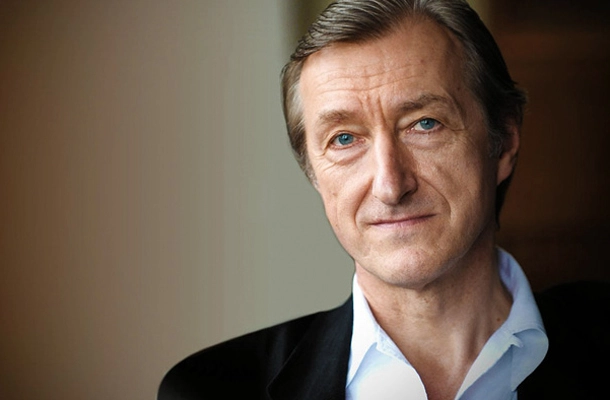
Julian Barnes is a highly regarded British author known for his novels, essays, and short stories. Born on January 19, 1946, in Leicester, England, Barnes studied modern languages at Magdalen College, Oxford.  

Barnes gained recognition in the literary world with works like "Metroland" (1980) and "Flaubert's Parrot" (1984), which showcased his talent for blending fiction with literary criticism and historical biography. His writing often delves into themes of memory, identity, history, and the intricacies of human relationships. One of his most acclaimed novels, "The Sense of an Ending" (2011), earned him the Man Booker Prize. His other notable works include "Arthur & George" (2005), "The Noise of Time" (2016), and "The Only Story" (2018).

Barnes's writing is celebrated for its wit, erudition, and stylistic innovation. He is widely regarded as one of the leading figures in contemporary British literature. Beyond his novels, Barnes has also published collections of essays, short stories, and non-fiction works, further showcasing his versatility and literary prowess.(Roberts)

About Novel The Only Story

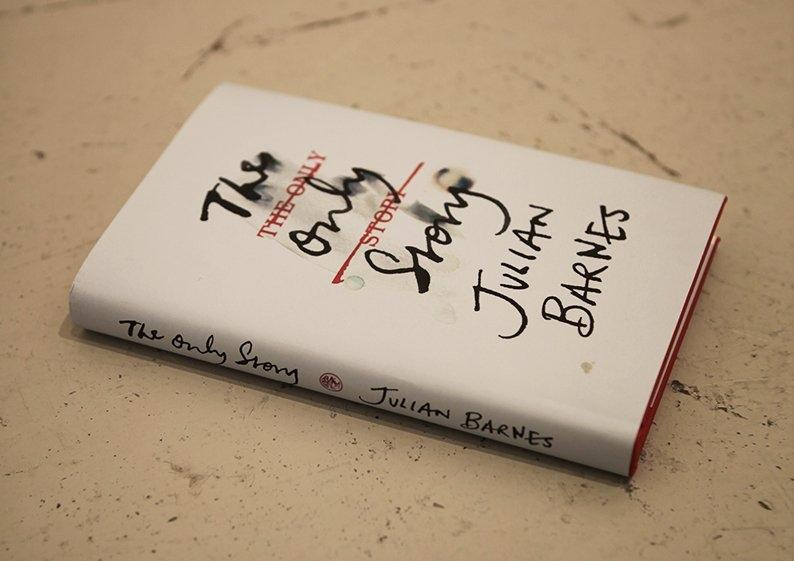
"The Only Story" is a novel by Julian Barnes, published in 2018. It tells the story of Paul, a young man who reflects on a transformative relationship he had with a woman named Susan in his youth. The novel is divided into three parts, each exploring different stages of their relationship and its impact on Paul's life. In the first part, Paul narrates the beginnings of his relationship with Susan when he was nineteen years old and she was forty-eight. Despite the age difference and societal disapproval, they embark on a passionate love affair that challenges their preconceptions abut love and relationships.

The second part delves into the complexities of their relationship as it begins to unravel under the weight of time, disillusionment, and personal struggles. Paul grapples with the realization that their love may not be enough to overcome the obstacles they face. In the final part, Paul reflects on the lasting effects of his relationship with Susan and how it has shaped his identity and understanding of love. He confronts the painful truths of their past and comes to terms with the choices he has made.

"The Only Story" is a poignant exploration of love, memory, and the passage of time. Through Paul's introspective narration, Barnes examines the transformative power of love and its enduring impact on the human psyche. The novel poses profound questions about the nature of romantic relationships and the ways in which they shape our lives. (Campbell)

What is the Unreliable Narrator…?


An unreliable narrator is a literary device where the person telling the story (the narrator) may be misleading, mistaken, or intentionally deceptive in their narration. This can lead the reader to question the reliability of the information being presented and to interpret the story in a more complex or ambiguous way.

Unreliable narrators are characters who convey a story but whose credibility or trustworthiness is questionable. They may intentionally deceive the reader, have distorted perceptions, or lack self-awareness, leading to a narrative that is subjective and open to interpretation.(Seddon)

Authors often use unreliable narrators to create tension, suspense, and ambiguity in their storytelling. By presenting events through the lens of a flawed or unreliable perspective, writers can challenge readers to question the truthfulness of the narrative and engage them in a deeper exploration of themes such as perception, memory, and reality. Unreliable narrators in literature, including examples from notable works and practical advice for writers seeking to employ this narrative technique effectively.

Type of Unreliable Narrator

Category

Description

Intentionally Deceptive

Deliberately lies or distorts the truth to manipulate the reader's understanding of events.

Unaware of Their Own Unreliability

The narrator is not conscious of their own unreliability, presenting their perspective as objective or truthful.

Deliberately Unreliable Narrator

Intentionally lies or misleads the reader to manipulate the perception of events.

Unaware Narrator

Relies on information provided by other unreliable characters, sometimes due to trust or memory issues.

Impaired Narrator

The character has memory gaps or distortions due to alcohol or drug use.

Paul Roberts as the Unreliable Narrator

In literature, the unreliable narrator serves as a captivating narrative device, challenging readers to navigate the murky waters of truth and deception. Paul Roberts, as depicted in our story, emerges as a multifaceted character whose narrative unveils layers of deceit and manipulation. Through his portrayal as the unreliable narrator, the story takes on a compelling complexity, inviting readers to question the veracity of the events unfolding before them.

Paul Roberts presents himself as an ordinary protagonist, offering a seemingly trustworthy account of the events that transpire. However, as the story progresses, subtle nuances in his narrative begin to unravel, revealing a character shrouded in ambiguity and moral uncertainty. Paul's intentional deception becomes apparent as he selectively withholds information, distorts facts, and manipulates the reader's perception to suit his own agenda.

Central to Paul's unreliability is his complex motivations, which drive his deceitful behavior. Whether fueled by revenge, greed, or a desire for power, Paul's actions are deeply rooted in his character's development and backstory. His moral ambiguity adds depth to the narrative, blurring the lines between right and wrong and challenging readers to confront the darker aspects of human nature. Paul's narrative control is integral to his portrayal as the unreliable narrator. With a calculated finesse, he maintains a tight grip over the story, carefully crafting it to portray himself in a favorable light and to achieve his desired outcome. Through subtle manipulations and strategic omissions, he adeptly guides the reader's interpretation of events, blurring the boundaries between fiction and reality.

As the story unfolds, twists and revelations punctuate Paul's narrative, forcing readers to reassess their understanding of the truth. With each revelation, the reader is drawn deeper into the labyrinth of Paul's deception, grappling with the implications of his unreliable narration. Ultimately, the resolution of the story beckons a reckoning with the consequences of Paul's deceitful actions and a reevaluation of the events through a more discerning lens.

Paul Roberts emerges as a captivating embodiment of the unreliable narrator, weaving a tapestry of deception and intrigue that challenges readers to unravel the truth hidden beneath the surface. Through his intentional deception, complex motivations, and narrative control, Paul invites readers on a riveting journey into the depths of human nature, where the lines between truth and fiction blur and the search for authenticity becomes a tantalizing quest. (Chalupský)

 Examples from Novel

"As a narrator, I would not be attempting to offer my audience objective facts of a recognizable reality, but rather my highly-colored perceptions and interpretations, given without any third-party or factual corroboration to demonstrate these as accurate, or even to suggest my awareness of my personal bias." (Davison)

  • "Would you rather love the more, and suffer the more; or love the less, and suffer the less? That is, 1 think, finally, the only real question. "(Barnes)

  • "I keep saying that I was nineteen. But sometimes, in what I've told you so far, I was twenty or twenty-one. These events happened over a period of two years and more"(Barnes)

  • "You understand, I hope, that I'm telling you everything as I remember it? I never kept a diary, and most of the participants in my story-my story! my life! - are either dead or far dispersed. "(Barnes)

"The first-person unreliable narrator never suggests they are like the God of their world by offering you a mutually agreed upon objectivity, but rather gives you his/her own view of what happened and why it appears so important that it needed to become a story." (Davison)

  • "Most of us have only one story to tell. I don't mean that only one thing happens to us in our lives: there are countless events, which we turn into countless stories. But there's only one that matters, only one finally worth telling. This is mine. "(Barnes)

  • "If this is your only story, then it's the one you have most often told and retold, even if - as is the case here - mainly to yourself. The question then is: do all these retellings bring you closer to the truth of what happened, or move you further away? I'm not sure"(Barnes)

  • "I said I never kept a diary. This isn't strictly true. There was a point, in my isolation and turmoil, when I thought writing things down might help. I used a hardback notebook, black ink, one side of the paper. I tried to be objective. There was no point, I thought, in merely venting my feelings of hurt and betrayal. "(Barnes)

Conclusion

In "The Only Story" by Julian Barnes, the protagonist, Paul Roberts, serves as an unreliable narrator, weaving a narrative that blurs the lines between truth and fiction. Through Paul's intricate storytelling, Barnes explores themes of love, memory, and the subjective nature of reality. As readers navigate Paul's narrative twists, they are invited to question their perceptions and confront the complexities of human relationships. Ultimately, "The Only Story" is a poignant exploration of the transformative power of love and the enduring impact it has on the human psyche.

Work Cited

Barnes, Julian. The Only Story. Alfred A. Knopf, 2018. 

Campbell, Ellen Prentiss. "The Only Story, by Julian Barnes." Fiction Writers Review, 17 April 2018,

https://fictionwritersreview.com/review/the-only-story-by-julian-barnes/

Chalupský, Petr. "Julian Barnes's The Only Story - Within and Beyond the Author's Idiosyncrasies." YouTube: Home, 9 November 2017, https://absa.upce.cz/index.php/absa/article/view/2348.

Davison, Neil. "What is an Unreliable Narrator? || Oregon State Guide to Literary Terms | Oregon State." College of Liberal Arts, 2019, https://liberalarts.oregonstate.edu/wlf/what-unreliable-narrator.

Jackson, Shirley. "Unreliable Narrator - Definition, Types, and Examples." Tutors, 13 February 2024, https://tutors.com/lesson/unreliable-narrator

Karen, Hewitt. "Who - or what - is an unreliable narrator? тема научной статьи по языкознанию и литературоведению." КиберЛенинка, 2008, https://cyberleninka.ru/article/n/who-or-what-is- an-unreliable-narrator.

Roberts, Ryan. "Biography." Julian Barnes, 1996, https://julianbarnes.com/bio/index.html.

Seddon, Holly. "The Unreliable Narrator: All You Need To Know - Jericho Writers." Jericho Writers, https://jerichowriters.com/the-unreliable-narrator/

Word Count:- 1866


Raakh: From Crime to Screen

 Introduction:- This blog explores the real Ranga-Billa case that inspired Raakh, examines how the true events were adapted into the series,...